Anson Resources eyes flow rates and resource increase at Green River lithium project
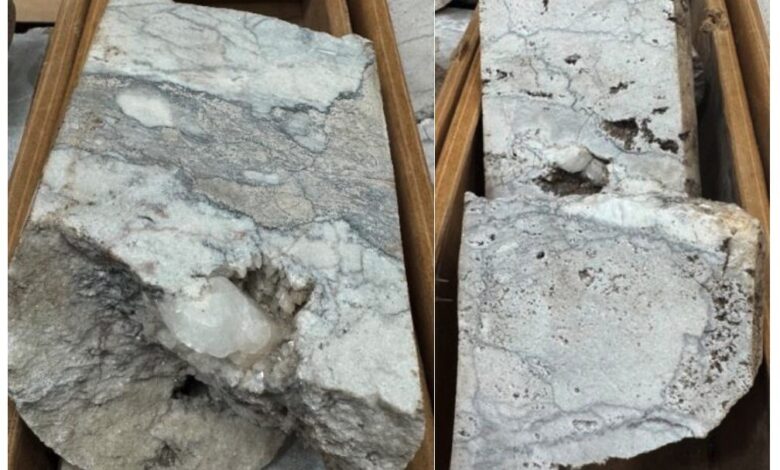
Anson is examining historical drill core from Green River to glean greater insights into the project’s geology. Pic: Getty Images
- Historical diamond core from Green River to be tested for porosity, specific yield and permeability
- Results will inform flow rate estimates and design of demonstration and production plants
- Fresh data expected to upgrade JORC resource and improve modelling
Special Report: A laboratory analysis of historical diamond core from wells drilled in the Mississippian unit of the Green River lithium brine project will provide more accurate reads of the project’s porosity, specific yield and permeability.
Anson Resources (ASX:ASN) intends to use the new data to determine estimated flow rates for its proposed lithium brine wells on the asset, as well as designing demonstration and full-scale production plants.
The company also expects its efforts to result in an upgrade to Green River’s maiden JORC estimate, which currently sits at 103,000 tonnes of lithium carbonate equivalent.
The resource accounts for only 24% of the project area, offering plenty of potential for growth.
ASN says discovering the historical diamond core is a boon for the company, allowing a fast-tracking of project initiatives at a low cost.
The samples were originally collected as part of earlier attempts at oil and gas exploration in the area.

Watch: Anson expands Green River lithium exploration in Utah
Upgrading the JORC model
The historical samples Anson has moved to re-examine offer insight into the geological conditions surrounding the company’s existing wells.
The core will be tested to determine the characteristics of the aquifer at Green River, including its capacity to transmit water or brine and the estimated fluid content, permeable zones and rock types.
Anson expects the resulting data to provide enough information to upgrade the area around the wells from the inferred to indicated JORC resource category, offering higher levels of confidence.
In addition to new areas of brine to target for extraction, Anson is interested in determining areas with thinner layers and smaller levels of brine which will serve as storage or disposal areas for waste brine once the lithium has been extracted.
The full breadth of data will be incorporated into models Anson will use to identify the location and number of extraction wells required to provide sufficient brine to feed the planned lithium production facility at Green River.
This article was developed in collaboration with Anson Resources, a Stockhead advertiser at the time of publishing.
This article does not constitute financial product advice. You should consider obtaining independent advice before making any financial decisions.